Broomfield, CO · Garage Door Service
Tune-ups built for Broomfield's 1958-2010 housing stock and cold winters. Catch worn rollers and hardening lube before a spring or cable fails on you.
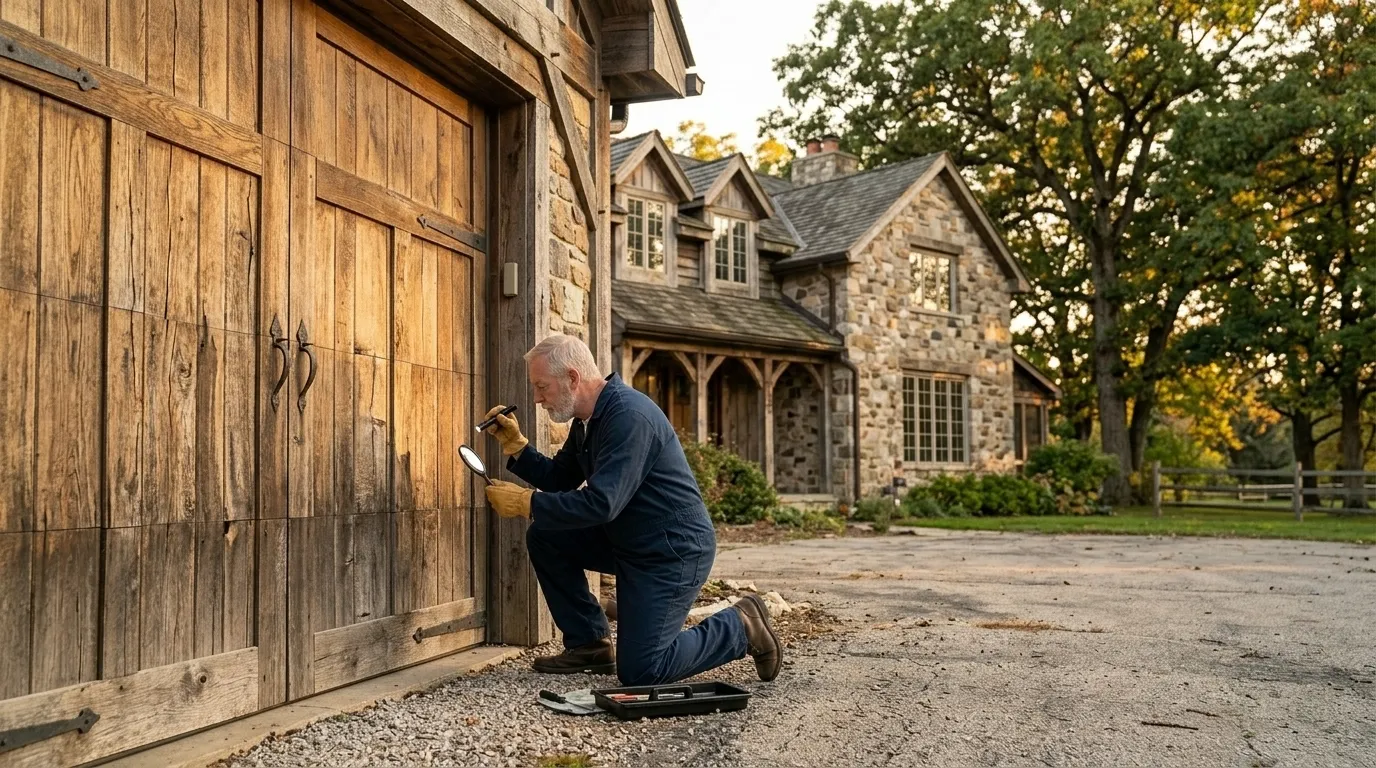
A maintenance visit is not a repair call, so the door stays usable the whole time. We work one panel and one track section at a time, testing balance and travel as we go, rather than pulling the door apart. Most of the homes we service across this stretch of the Front Range - the 30 named subdivisions between Interlocken and East Central Westminster - were built between 1958 and 2010, with the bulk going up in the 1980s and 90s. That means original hardware that's now 30-40 years old on a lot of doors, and worn parts don't always announce themselves before they fail mid-cycle.
If we find a spring near the end of its cycle life or a cable showing fray, we'll tell you before we touch it, not after. Some of that work can happen the same visit if you want it done. If it needs a part we don't carry on the truck - certain wide double-door torsion springs, for instance - we'll say so and schedule the follow-up rather than leave you guessing. The honest version: a tune-up that turns into a same-day spring swap will run longer than the hour you might expect, because we're not going to rush a spring under tension.
We don't post a flat number here because what a door needs depends on its age and how it's been running, and pricing that ignores that is a guess dressed up as a quote. What we can tell you is how we decide: a straightforward lube-and-adjust visit costs less than a visit where we're also replacing rollers or resetting spring tension on a door that's been out of balance for a while. Given that median housing age of 1982 across this service area, a lot of the doors we open still have their first or second set of springs, and that's usually where the bigger line item shows up.
We quote before we start any additional work, not after. If a tune-up uncovers something the door needs beyond routine maintenance - a bent track, a worn bottom bracket - you'll hear the number and the reasoning before we touch a wrench to it. No add-on gets billed as part of a base visit without you signing off on it first.
The one we see most in this climate band is grinding or hesitation on the first opening of a cold morning, followed by a door that runs fine once it warms up. That's hardened lubricant on rollers and hinges, or a spring that's lost a little tension overnight and is fighting the opener to get moving. On older torsion setups - common in the 1980s-era stock that makes up most of this service area - that hesitation is often the first sign of a spring nearing the end of its rated cycles, not just a lube problem.
A second pattern: a door that reverses partway up, then works on the second try. That's usually a sensor or limit switch that's drifted out of adjustment, not a broken part, and it's a five-minute fix during a tune-up visit. The symptom that worries us more is a door that's noticeably heavier to lift by hand than it used to be - that's spring fatigue, and it's the kind of thing that turns into a snapped cable if it goes unaddressed through a full winter.
This is a cold-climate service area, and that matters for a door in ways that have nothing to do with the motor. Steel torsion springs lose a measurable amount of tension as temperature drops, and standard lubricant thickens in the cold, which is why a door that ran smooth in October can start grinding by January without anything actually breaking. That combination hits hardest on doors that haven't been serviced through a winter cycle before.
Add in the age of the housing stock - built mostly from 1958 through 2010, with a heavy concentration in the 1980s and 90s across the named areas we cover, from Lafayette and Northglenn a few miles out to Frederick and Niwot further north - and you've got a large share of doors running original or first-replacement hardware that was never rated for indefinite service. A spring engineered in 1985 doesn't know or care what decade it is; it just has a cycle count, and cold weather use burns through that count faster than a mild-climate door ever would.
Once a year is the baseline we recommend, ideally before the first hard cold snap, since cold is what exposes a marginal spring or thickened lubricant fastest. If your door is original to a home built in the 1980s or earlier, twice a year - spring and fall - catches wear before winter turns it into a breakdown.
Often yes, if it's lubricant that's hardened rather than a spring that's actually fatigued. We test tension and balance during the visit and can usually tell you on the spot which one you're dealing with, rather than guessing and hoping a re-lube solves a hardware problem.
Yes. A lot of the doors we open have original torsion springs from construction dates in the 1960s through 80s. We check cycle wear on those specifically, since a spring that old is closer to end-of-life regardless of how well it's been lubricated.
By Neighborhood
We also handle maintenance in these Broomfield-area suburbs.
Call now or request a free quote - same-day service on most repairs, upfront written pricing.